
In the UK’s social housing sector, asbestos continues to be one of the most persistent and highest-risk compliance areas. This is despite the use of asbestos in construction having been entirely banned in the UK since 1999, followed by decades of awareness and regulation.
That outlawing of the mineral related to its future use. It did not automatically mean the removal of all asbestos-containing materials (ACMs) from properties where they were already present.
So, if you are a social landlord with responsibility for a residential building dating back to before the year 2000, there will almost certainly be ACMs still embedded in the fabric of this structure. This underscores that the management of asbestos risk isn’t a merely historical issue, but very much a current one.
Managing asbestos risk in your capacity as a social landlord, though, means navigating a web of tenant safety, contractor involvement, and ever-tightening regulatory scrutiny from such bodies as the UK Health and Safety Executive (HSE) and the Regulator of Social Housing (RSH).
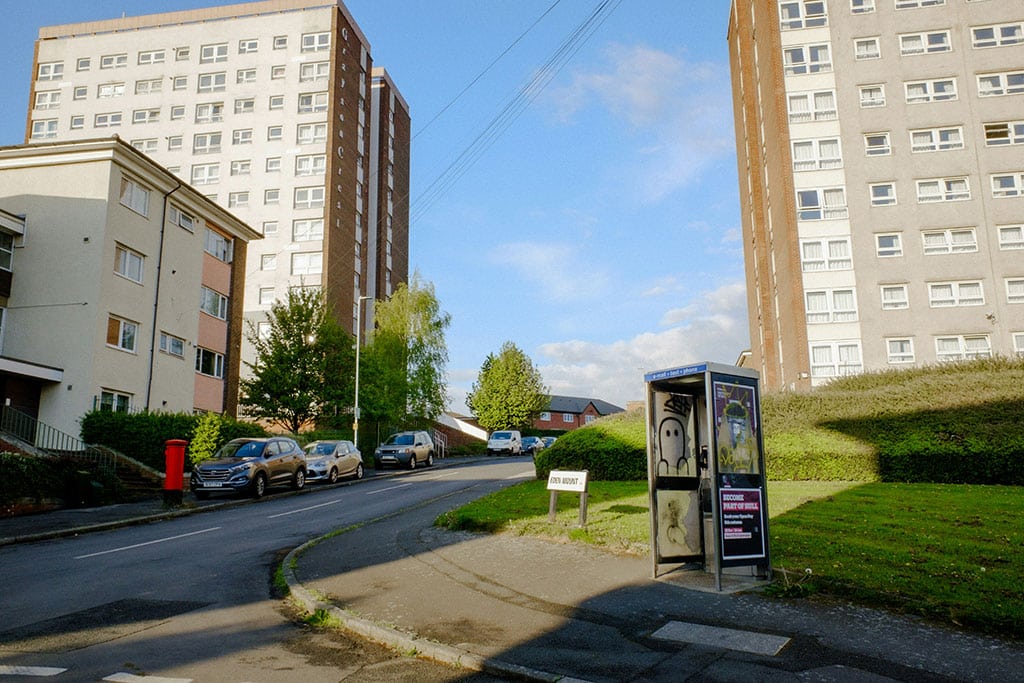
What does ‘losing control’ of asbestos risk look like for social landlords?
Keeping on top of asbestos risk can feel especially complex for social housing providers. After all, you might have a vast portfolio of properties of varying ages to deal with. These buildings, in turn, may contain a multitude of ACMs such as asbestos cement roofing sheets, asbestos insulating board (AIB), and/or asbestos loft insulation, to name just a few examples.
You might also be concerned about the specific vulnerability of some of your tenants and the constant churn of necessary maintenance work, which could heighten the risk of ACMs being accidentally disturbed. In the event of such a disturbance happening, and someone nearby breathing in airborne asbestos fibres, this could greatly increase their likelihood of developing a potentially fatal asbestos-related disease, such as mesothelioma, many years later.
As for what “losing control” might look like for a social landlord, this can manifest in a variety of ways. Asbestos registers for your properties might not have been updated for years, in which case they may not reflect the current situation regarding ACMs at your sites. It may also be unclear who is responsible for what, or you may lack visibility into the complete picture of asbestos risk across your social housing stock.
Deficiencies like these in your asbestos management approach might leave you in a constantly reactive, rather than proactive, mode. So, in this article, we will provide you with the insights and strategies to help you regain and maintain control.
What legal and practical responsibilities do social housing providers have for asbestos?
Under the Control of Asbestos Regulations 2012 (CAR 2012), social housing providers in Great Britain are designated as “dutyholders”. This means that as a social landlord, you’re legally obligated to identify, assess, and manage ACMs in your properties to prevent exposure.
It is vital to be clear about the difference between identifying asbestos and actively managing the risk this lethal substance can pose. Arranging an asbestos survey, such as a management survey, can help you identify asbestos in a building you are responsible for. However, the management of any identified ACMs requires a plan that encompasses measures such as regular inspections, risk assessments, and controls, including encapsulation or removal.
Your exact responsibilities across a particular building may vary. In communal spaces such as stairwells and lobbies, you will be fully responsible as the social landlord. Voids (empty properties) present opportunities for thorough checks to be carried out. But if a given property for which you are the social landlord is occupied, careful coordination will be required to minimise disruption while ensuring safety.
Regulators like the HSE focus on evidence, not mere intent. It isn’t enough, then, to simply say you’re compliant; you must prove this through records, audits, and demonstrable actions.
How do you keep an asbestos register accurate across a large housing portfolio?
An asbestos register is a mandatory document in the UK that records the location, type, and condition of all known or presumed ACMs in a building. It shouldn’t be confused with an asbestos survey, which is an inspection process that provides raw data about ACMs within the given property, followed by this information being fed into the asbestos register.
As a social housing provider in the UK, you are legally required to maintain an up-to-date asbestos register for each building or site you manage that contains, or is likely to contain, ACMs.
It is crucial to remember that the asbestos register is not meant to be a static document or a dusty archive. Instead, you need to treat it as a live operational tool that evolves in line with your estate. Entrenching this approach to your asbestos register will greatly help ensure it remains accurate at all times.
Certain classic challenges can often arise with asbestos registers. These can include multiple asbestos surveys having been undertaken over time, and historic data about a given building’s asbestos situation being kept in varying formats, such as paper scans or old databases. The sheer scale of many social housing portfolios can also make the management of multiple asbestos registers even more daunting.
The good news is that you can help tackle these challenges by investing in cloud-based software, such as Vision Pro Software, that links asbestos data directly to real locations and assets. Doing so can be instrumental in turning abstract entries into actionable insights.
How can you stay in control when contractors and maintenance teams are involved?
Contractors play an essential role in keeping social housing in the best possible condition. However, their entry into a property can introduce risks if asbestos information hasn’t been shared with such professionals before they commence their work.
Fortunately, by being well-prepared, you can help ensure you remain in control of the asbestos risks at your properties, even when contractors need to be on-site.
Certain activity involving asbestos, for instance, will require a licence from the HSE. So, you should ensure you are well-informed on the specific situation for any contractor who will need to visit your social housing.
Don’t forget to also verify the competence of any contractors that will be accessing your property. For example, while it isn’t a strict legal requirement, if you are seeking to use an asbestos surveyor, the HSE strongly recommends that you turn to professionals accredited by the United Kingdom Accreditation Service (UKAS).
Bear in mind, too, that an asbestos method statement (plan of work) will be required whenever any work is undertaken that may disturb, remove, or repair ACMs at one of your sites.
How can Vision Pro Software help social housing providers stay in control of asbestos risk?
There are a number of respects in which our own Vision Pro Software can make the management of asbestos risks easier for social landlords:
- This cloud-based system effectively centralises asbestos registers, surveys, documents, and actions in a single accessible place.
- It links asbestos data directly to buildings, locations, and tagged assets, thereby helping to ensure pinpoint accuracy.
- Mobile inspections with offline data capture allow for records to be kept current, even when those accessing and using the software are working remotely.
- The software incorporates action tracking, with clear ownership, reminders, and automated re-inspection alerts. This goes a long way to ensuring nothing is overlooked.
- The real-time dashboards of Vision Pro Software show asbestos risk status across a potentially wide portfolio of properties, highlighting risk hotspots instantly.
- A clear audit trail is created by the software, with this supporting regulatory inspections as well as internal assurance.
- Asbestos management is integrated with wider compliance areas, such as fire risk and asset management, as part of a holistic compliance ecosystem.
If, then, you are looking for a digital solution that will help you reduce administrative burdens, sharpen your decision-making, and prioritise tenant safety in your work as a social landlord, you can have faith in Vision Pro Software as a complete asbestos management platform.
Conclusion: How do you manage asbestos risk without losing control?
Your control over asbestos risks as a social housing provider will stem from visibility, consistency, and your confidence in the data that you gather about ACMs across your portfolio.
One of the most important shifts to make is moving from treating asbestos management as a one-off task to making it an ongoing process embedded in your daily operations. This will enable you to transition from “firefighting” mode to a more foresightful approach to asbestos risks.
Having the right systems in place, such as Vision Pro Software, can help alleviate pressure on your teams while improving safety. A sustainable and auditable approach will build resilience. To achieve this, you should focus on aspects such as accurate registers, prioritised risks, seamless contractor integration, and interconnected compliance.
There is no doubt that in the UK social housing sector, the stakes are high and resources are stretched. This further emphasises why mastering asbestos management in a time-efficient and cost-effective way isn’t optional for social landlords; it is essential for protecting lives and legacies.
Speaking to our team about Vision Pro Software and booking a demo of our system could be one of the best steps you take to establish and maintain control over asbestos risks across your social housing portfolio.


